


What happens when you strip the name off a Nobel Prize-winning masterpiece and send it to modern publishers? In 2017, writer Serge Volle conducted a sting operation on the French publishing industry that exposed a chilling reality. He submitted 50 pages of Claude Simon’s The Palace to 19 publishers under a pseudonym. The result? Nineteen rejections. The editors claimed the sentences were too long and the plot was missing.
This essay explores the Le Palace Experiment and the institutional fallacy currently rotting the world of books. From George Orwell to William Golding, the history of publishing is a history of being famously wrong. But today, the problem isn’t just bad taste—it’s a checklist brain that has traded literary discovery for risk insurance. If you’ve ever wondered why the modern bookstore feels like a frictionless slide rather than a mountain, this is the reason.
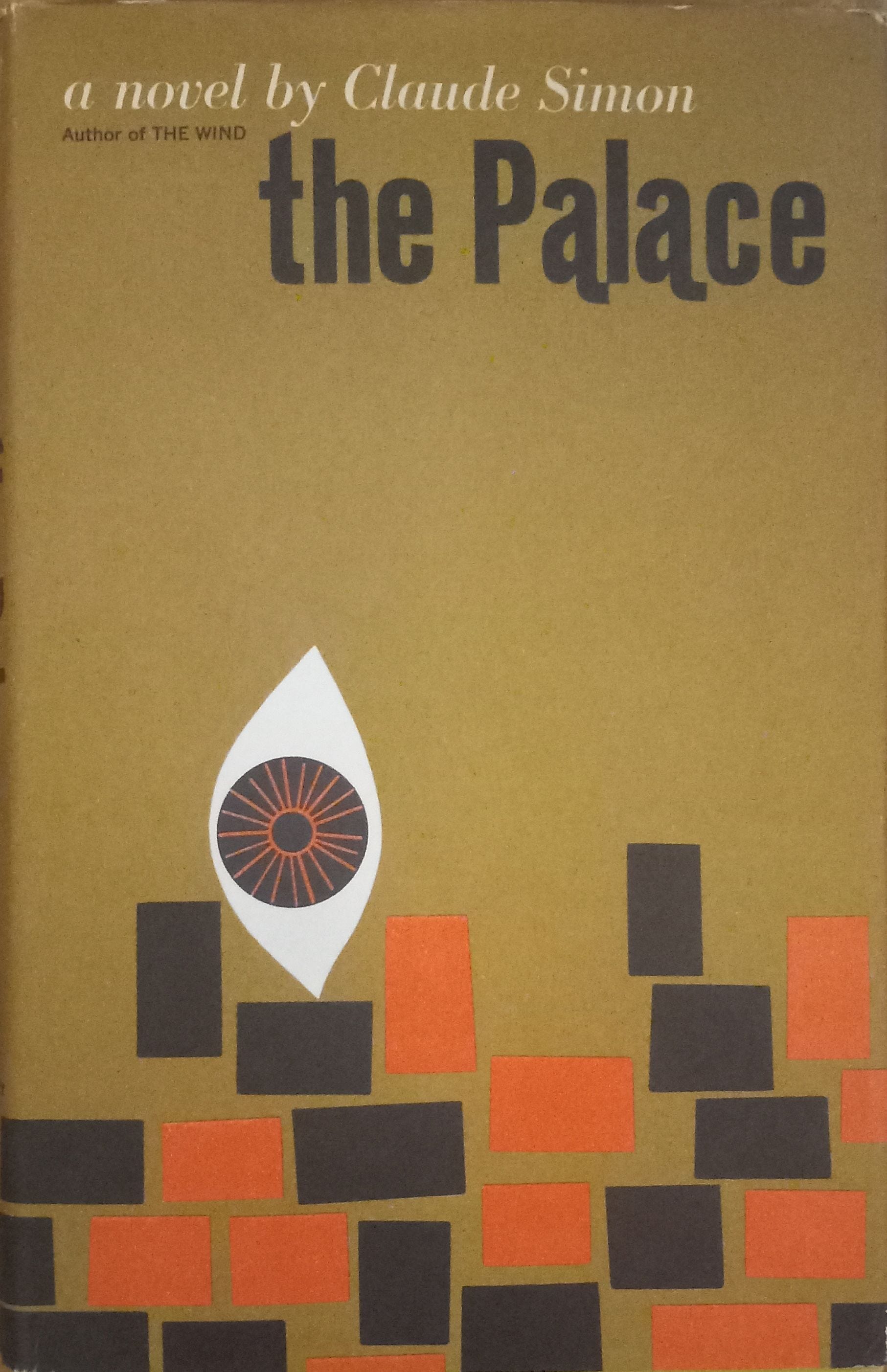
The Le Palace Experiment
Volle—a French writer and Claude Simon fan—took fifty pages of Simon’s Le Palace, stripped the author’s name off, put a pseudonym there instead, and sent the text to nineteen French publishers.
Le Palace is one of Simon’s most controversial books. Many critics read it as a thinly veiled attack on George Orwell, the British author who, like Simon, had fought for the Republicans during the Spanish Civil War in the 1930s.
Twelve said no. Seven said nothing, which is its own kind of no.
Nobody recognized Simon. Nobody asked: isn’t this the work of a Nobel Prize-winning author?
Two editors sniffed something familiar—like a dog passing a piss stain—but they didn’t recognize the scent.
The rejections: The sentences are too long. They lose the reader. There is no real plot. No clearly drawn characters. The style is out of date.
Translation: This manuscript causes friction. It asks for time. It demands something of the reader.
The Truth: We don’t know how to sell this.
Calling a style out of date is the most cowardly kind of criticism because it says time is a jury. It isn’t. If Simon’s prose is unreadable now, the implication is that the human brain has evolved backward—that attention has shrunk, and the only legitimate pleasure left is the pleasure of not being challenged. They expose the kind of reader the industry is optimizing for: the one who wants to be snuggled, cozied, pampered, and titillated.
Excellence is no longer recognized; it is only permitted once the author comes with a badge. Put Claude Simon on the cover and these exact same pages become hypnotic, architectural, and demanding in the best sense. Without the name, they are boring and confusing.
This tells you what the institution is actually buying: risk insurance. Publishers may not even understand what is good. Certainly, they don’t care. They choose what won’t embarrass them. Ideally, they want a manuscript that sounds like a Netflix pitch, because then there’s the hope it can be sold to the streaming giants.
Claude Simon’s books—written in the style Nouveau Roman—were written to mimic the way memory actually behaves: looping, choking, skipping, returning with a detail you didn’t know mattered until it stabs you. That density is the point. Yes, these books are hard to sell. Art is about taking risks. But publishers don’t want risk.
Volle proved that modern publishing has pivoted from discovery to verification. Discovery is messy. It requires people with weird, stubborn taste who are willing to look stupid for loving something unapproved. Verification is tidy. You don’t get fired for going with a pre-approved brand. The literary world still worships genius, but only after it’s been made safe—by authorities that are not them.
The industry has a habit of being famously wrong, of course. It told Orwell his politics were off ("We have no conviction that this is the right way to criticize the political situation at the present time") and that William Golding’s Lord of the Flies was "an absurd and uninteresting fantasy which was rubbish and dull."
But those famous failures had a heartbeat.
Today’s rejections are coming in faster, colder, and automated.
Look at the form letters:
“I’ve decided to decline... better luck with another publisher!” “Unfortunately, a manuscript of 20,000 is too short for my preference.” “This decision is purely about fit and timing and is in no way a reflection of your talent.”
New authors don’t stand a chance unless they fit into very narrow categories, and very narrow checklists. A new Claude Simon? Forget it. A new Kafka? Forget it. What do you get? Milking minotaurs and romantic fantasies with titles like “A X of Y and Z”. These are not books, they are SEO keywords. Publishers aren't looking for a voice; they are looking for a metadata match. The industry has decided that if a reader isn’t hooked by page three, the author has failed. This effectively bans the entire tradition of high-literary modernism.
Literature is losing. The gatekeepers of old have been replaced by a filter. A gatekeeper might eventually be persuaded by brilliance or persistence; a filter simply discards anything that doesn’t fit the programmed parameters. Ursula Le Guin didn’t tell stories so much as ask questions. She would not get a pass today.
Volle proved that 19 publishers couldn’t recognize a Nobel winner. Today, I wager 1,900 publishers wouldn’t even see him—his manuscript would probably be auto-rejected by an AI screener before a human ever laid eyes on it. An AI screener that is trained on existing bestsellers. Nothing new is allowed. The new Claude Simon isn’t just being rejected; he’s being rendered invisible.
Take a trip into a bookstore. Tell me what you see.
I see a sea of pastel blobs and bold curly fonts; books that look like they were approved by a committee for a demographic, rather than written by a soul for a reader.
In this climate, a masterpiece isn’t just a hard sell; it doesn’t even belong.
I'm largely in sympathy with you here, but I have to demur on one point.
"Calling a style out of date is the most cowardly kind of criticism because it says time is a jury. It isn’t. If Simon’s prose is unreadable now, the implication is that the human brain has evolved backward—that attention has shrunk, and the only legitimate pleasure left is the pleasure of not being challenged."
Every work of art is of its time and culture. It addresses current concerns in a current style. It makes references to current things and to things currently known and studied. Time is not a jury, but it is a veil. The concerns become more distant. The unfamiliar style seems dissonant. The references recall nothing to the mind. A famous name persuades us to put in the effort to pull back the veil, but without that spur to effort, the work will simply seem unreasonably difficult.
Stripped of its reputation, it is hard to think of a single classic that would get published today. They are purchased and read, after all, largely on the strength of their reputations. Deserved reputations, certainly, but reputations won in a different time.
The question to me is, are they missing work of similar calibre written today, or is there nothing of the calibre being written?
Spot on! Having been on the losing end of this battle, I have found that despite whatever agents and small presses say they are looking for (fresh voices, new perspectives...), they really want the same old thing wrapped in a slightly different bow.
On calling a style out of date -- I believe agents and publishers are looking for writing that lacks style. Personal style gets in the way of quick reading. It can be misinterpreted by inexperienced readers. It's something that can turn off a reader...and a sale.