


Most writers lump “money, fame, and craft” into one giant ball. This essay forces the reader to realize these are separate lanes.
Stop feeling like a failure in one area (e.g., money) just because you are succeeding in another (e.g., finishing a manuscript). Prioritize one goal at a time without guilt.
Read on, find your lane.
Most writers aren’t stuck because they’re lazy or untalented. They’re stuck because they’re trying to play a game where they don’t understand the rules.
Ask ten writers what “making it” means and you’ll get wildly different answers: paid work, real readers, a finished manuscript, status with the right circle. None of those is delusional. The delusion is assuming they naturally merge into one thing if you just “keep going.” They don’t. They are separate lanes, and they rack up years you don’t get back.
But before you can define what success means for you, you have to understand the “Muse”—or what moves beneath. We tend to think about it like it’s some spooky, external force. Psychologically, it’s simpler: it’s your intrinsic motivation, the fuel that keeps you going. It shows up as flow—the mental sweet spot where the difficulty of the work lines up with your actual skill.
If you choose a lane only because it pays well but it doesn’t challenge or interest you, the engine eventually locks up. You can’t grind forever on fumes. Fulfillment isn’t the best measure of success, but it is the measure of whether success can last.
Every path forward needs to answer two questions: Does this pay? Does this keep the Muse fed?
Everyone carries this romantic picture: write the great book, publish it, and everything else falls into place. Readers appear. Money shows up. Legitimacy crystallizes.
History reinforces the fantasy because it lifts up the people it worked for.
But do yourself this one, chilling favor: look up early anthologies, before any of the contributors were famous. You’ll see one or two recognizable names surrounded by the forgotten.
Take Dangerous Visions (1967). This anthology featured 33 original stories pushing boundaries on sex, society, and speculation. Philip K. Dick submitted “Faith of Our Fathers”—at the time he was a prolific but underpaid pulp writer. Samuel R. Delany contributed “Aye, and Gomorrah” while still building his reputation in his mid-20s. But contributors like Jonathan Brand, Kris Neville, and Howard Rodman produced quirky, experimental pieces and never achieved widespread recognition. They remained niche figures, their careers pivoting to other fields or fading entirely.
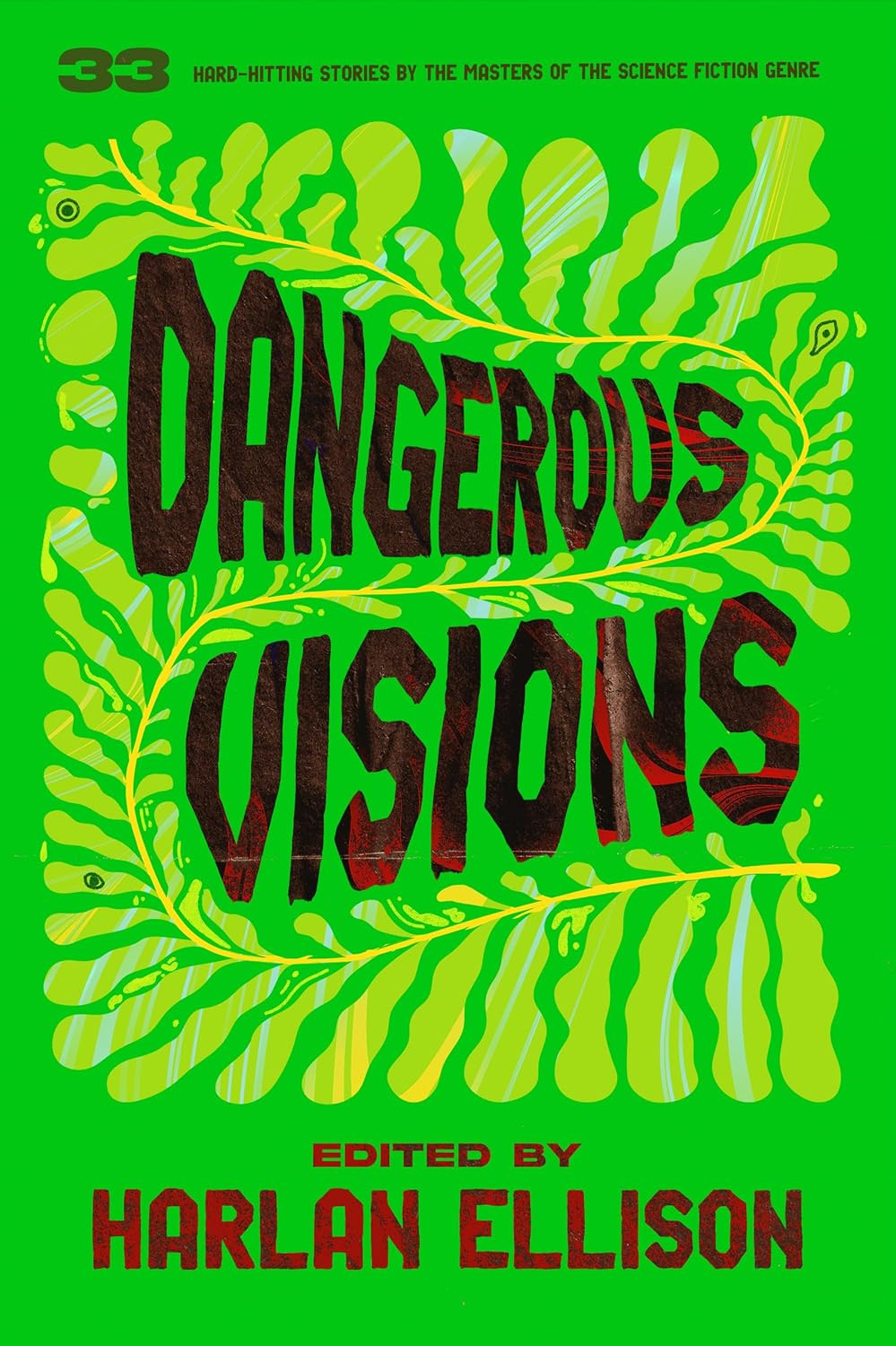
What separated Dick and Delany from the rest? Not just talent. Dick’s pathway involved relentless output—over 40 novels and 100+ short stories—combined with adaptations that amplified his work posthumously. True fame came after his death in 1982. Delany’s path involved academic pursuits, advocacy for queer and Black representation in genre fiction, and innovative works like Dhalgren, which sold over a million copies.
Neither of them just wrote and waited. They found ways to keep the Muse engaged while building something sustainable around their work.
The Mountain Is Now a City
The lessons endure, but times have changed.
The old “starving artist” trope—grinding through rejections for that one big break—feels increasingly outdated. Digital platforms have democratized access. AI tools handle a lot of grunt work. The mountain has become a city: multiple routes, different vehicles, various destinations.
Modern writing careers look more like picking routes that match your vehicle—your skills, energy, and goals—without paying extra tolls for authenticity points. You’ll end up arriving late. Or not at all.
So what’s the fix?
Define success on your terms, then build systems around it. Here are some real-world paths where writers are actually thriving today:
Freelance and content writing is the bustling downtown route. High traffic, reliable pay, but watch for low-ball clients. You’ll find gigs via LinkedIn, Upwork, and niche job boards, focusing on SEO-optimized blogs, emails, and social content. The ugly truth: many are using AI for drafts, cutting production time dramatically. The Muse can survive here if you find niches you genuinely care about—otherwise it’s pure mercenary work, and that has a shelf life.
Ghostwriting and sales copywriting is the toll road. Premium access, but you pay with anonymity. It’s exploding for those with people skills—interviewing clients for memoirs or crafting sales funnels. A common pivot: start as a side hustle while in a day job, building to six figures annually. It rewards repetition but allows fulfillment through client impact, without the ego hit of public credit. For some, that trade-off feeds the Muse. For others, it starves it.
Newsletter and non-fiction writing is the subway system. Underground at first, but connects you everywhere once built. Platforms like Substack, Beehiiv, or X Premium let you monetize directly. Top earners blend evergreen advice with timely hooks. Writers transitioning from freelancing to newsletters report $10K/month from 1,000 paid subscribers, plus upsells like courses. The Muse thrives on community feedback—you’re building a relationship, not just shipping content.
Genre fiction and self-publishing is the scenic route—and honestly, this is what most of us are here for. Amazon KDP, Kickstarter, or serialization on Wattpad and Royal Road lets you bypass gates. Don’t punish yourself with isolation. Beta readers and online communities accelerate improvement. Balance word count goals with reader retention metrics. This is where the Muse often feels most at home, but it’s also where income is least predictable. The key is finding ways to sustain the work while you build an audience.
Hybrid and entrepreneurial paths are the overpass. For maximum fulfillment, stack routes: write books as a cornerstone while diversifying into courses, speaking, or freelance gigs. This gives you prestige from books, income from gigs, and impact from teaching. The Muse gets variety; the bank account gets stability.
The Progress-Traps
You hear the same lines over and over, and they sound reasonable until you examine them:
“I just need to finish the book.” Finishing is real, but it’s not a career strategy by itself. A finished draft is potential energy. It doesn’t move until something converts it.
“I don’t care about money.” Maybe emotionally. But operationally, money is time and cognitive safety. Ignoring it doesn’t make you principled. It makes the constraint invisible until it controls you—and a stressed, broke writer is a writer whose Muse goes quiet.
“If it gets adapted, everything changes.” Sometimes. But usually only if there’s already leverage. Without that, an adaptation is a loud moment that doesn’t restructure your life.
“I just want to feel fulfilled.” Sure. But fulfillment is a terrible KPI. It swings with sleep, stress, and reception. Steering by it is like steering by weather. The Muse needs to be fed consistently, not chased moment to moment.
These aren’t dumb statements. But they’re signs of a half-drawn map.
Books Aren’t the Unit
Here is the truest advice I can give: a book is not the unit. A book is the artifact. The unit is the audience.
Once you understand that, the routes multiply. Projects get finished through serial work, community pressure, or paid deadlines that force an ending. Readership grows on platforms, through audio, collaborations, and low-friction ways for people to try you and come back. Income is usually steadier via patronage, education, serialized access, or licensing than through one-shot launches. Impact tends to come from being early, clear, and remixable rather than “perfect.”
Real leverage comes from control—your distribution, your data, and direct relationships—not from trading those away for a stamp of prestige.
Pick the Game
The most expensive mistake isn’t losing. It’s playing without knowing the rules.
A sustainable career starts when you can say, plainly: “Right now I’m prioritizing X, even if it slows Y.” You can switch later. You can stack. But you can’t honestly pursue all of them at full throttle at once.
“Making it” isn’t reaching a place other people envy. It’s aligning your actions with the kind of success you actually want, then paying the cost on purpose.
And remember why you wanted to play in the first place. The rules keep you from getting lost—but the Muse is the reason you keep writing. Without it, you’re just being busy.
Pick your lane. The rest doesn’t get easy. But that’s the first step to “Making it,” and maybe now it finally makes sense.

That’s astonishing. I hope you sat back and took a moment of pride in that achievement.
Exactly. There’s no shortage of excellent writers or serious books. What’s underpaid isn’t talent, it’s depth.
The current system rewards speed, volume, and emotional manipulability far more than craft or thought. Exposure replaced remuneration, and passion became a convenient excuse for chronic underpayment.
This isn’t a failure of writers. It’s a structural failure of how value is measured and distributed. Many of the best works were never meant to be fast, viral, or endlessly optimised and they pay the price for that integrity.
The challenge now isn’t just to write well, but to build conditions where serious writing can survive with dignity.
Reason why so many are only valued after death.