


Oh sure, A Doll’s House has its merits. I’ll give him that.
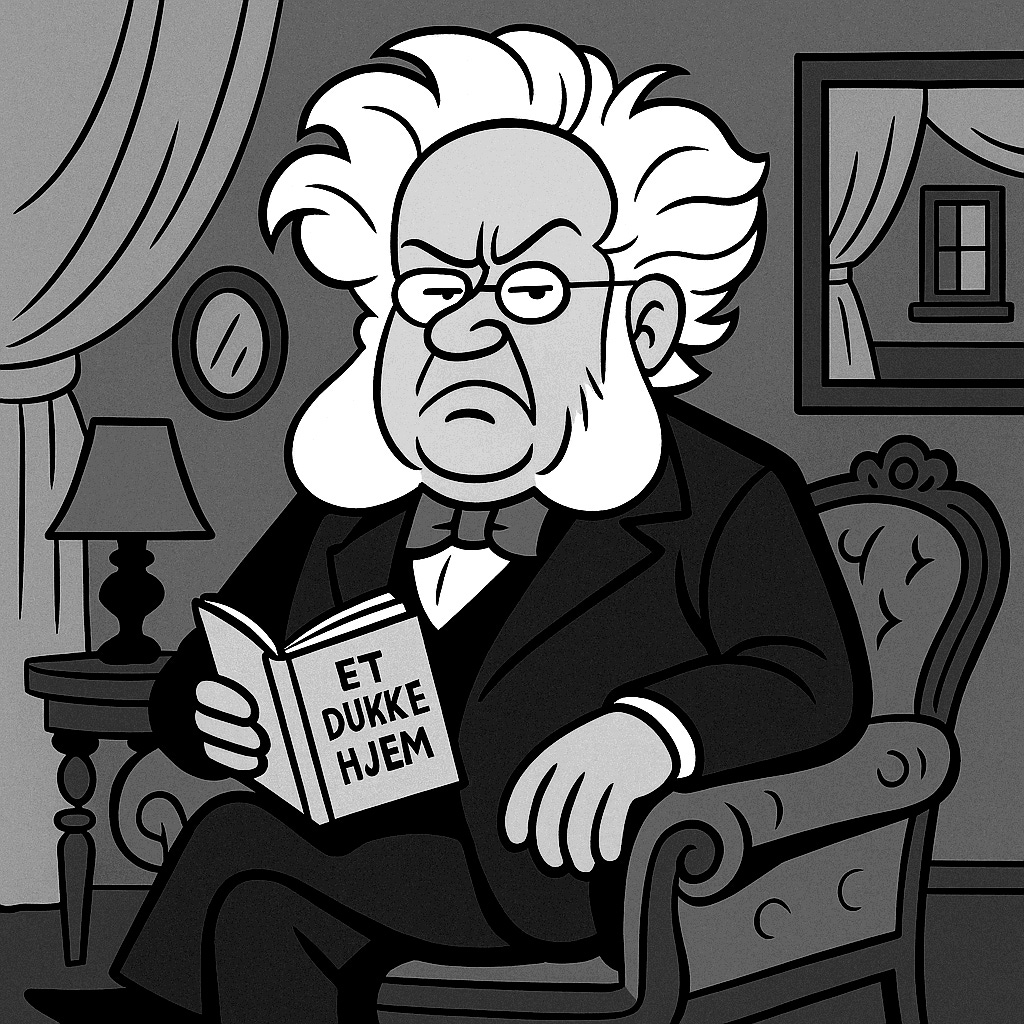
But my hatred for Ibsen runs deep. Maybe because I grew up practically next door to his moral swamp, where every living room felt like a stage set for emotional suffocation.
Maybe. But hear me out.
Ibsen had one diagnostic hammer: self-deception.
Everything else was just a different type of nail.
Marriage? Self-deception.
Artistic dreams? Self-deception.
Politics? Take a guess.
Family life? You know the answer.
All his characters walk around like they know something is wrong but refuse to say it.
Until the final act, when someone finally proclaims:
“We’ve been lying to ourselves!”
Cue the ritual ending: someone dies, someone leaves, or someone sets fire to something (if it’s Hedda).
He wrote as if the world was one big group therapy session.
Only nobody knew they’d signed up for it.
And sure, it’s a sometimes fascinating watching him peel the skin off Europe’s conscience while pretending to write about domestic life.
But his lyric makes you gasp for air.
The walls close in, the curtains get heavy.
Everyone starts speaking like they’re aware of the audience.
And so he became Norway’s national poet.
Then Hamsun came along, kicked the furniture over, and reminded us that people have blood, not symbolism.
Ibsen built the house. Hamsun burned it to keep warm.
And I?
I was born in the smoke.